Curved surfaces are among the hardest to clad: a rigid sheet will not wrap around a round column or a shaped counter. Flexible MDF solves this with pieces that are hinged to each other and follow the curve.
How does it work?
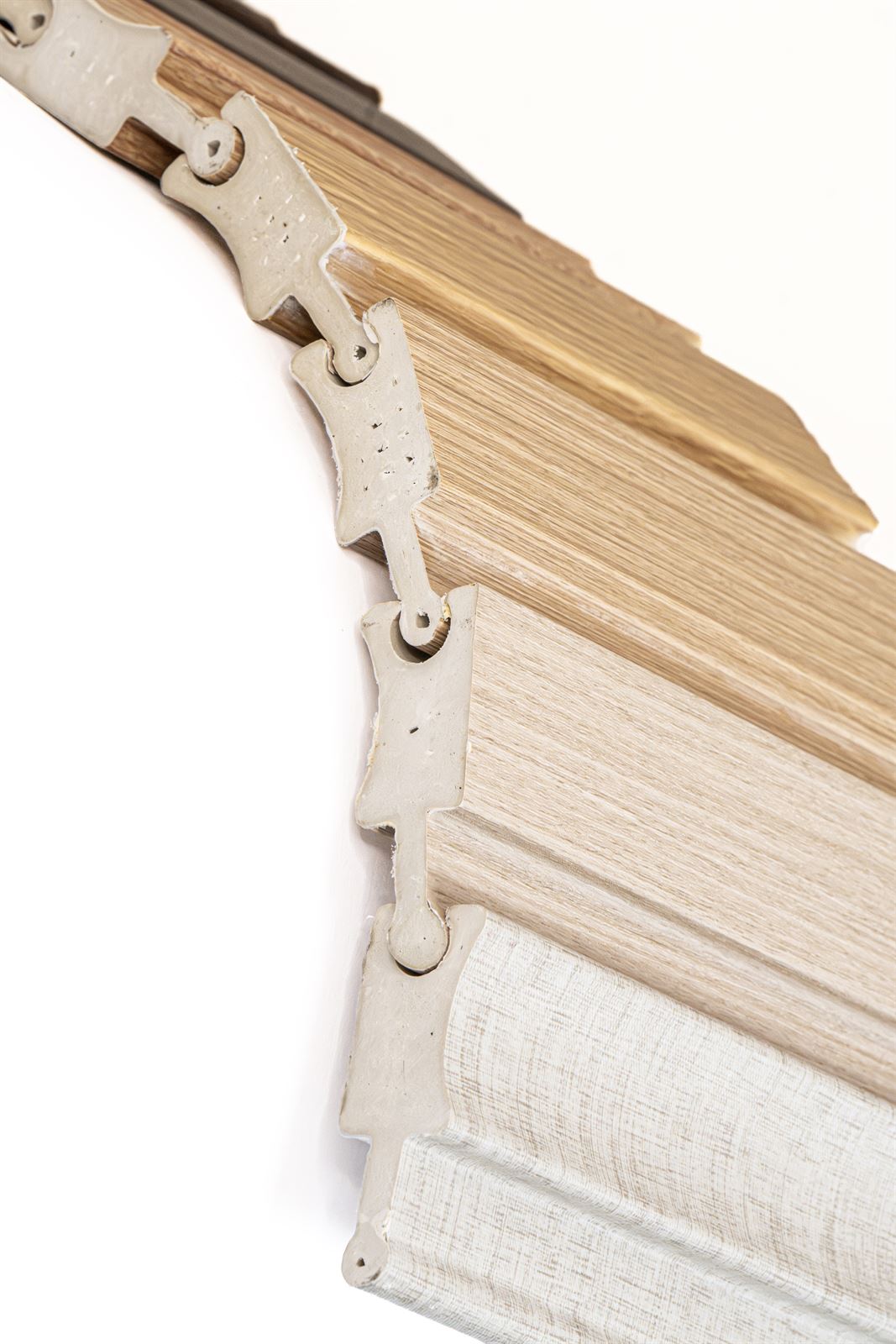
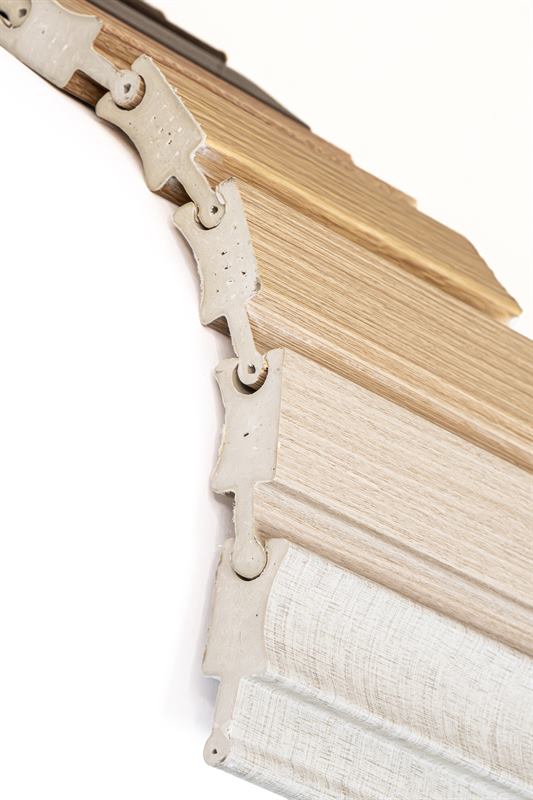
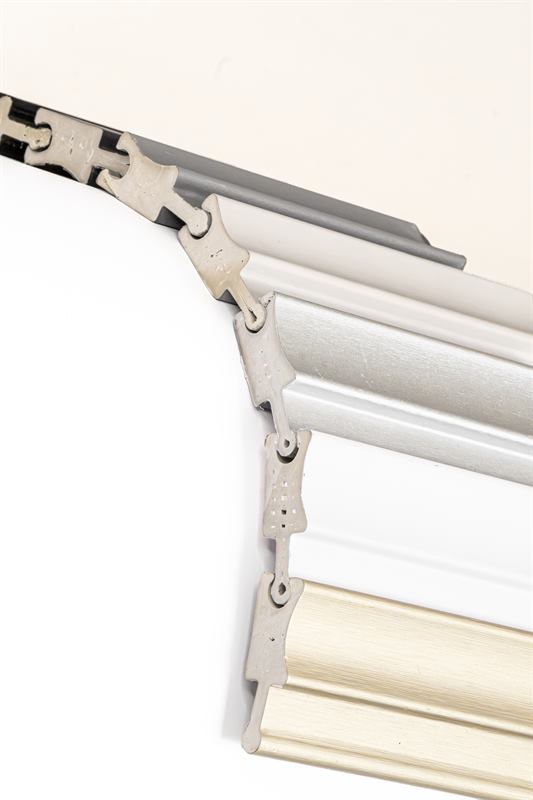
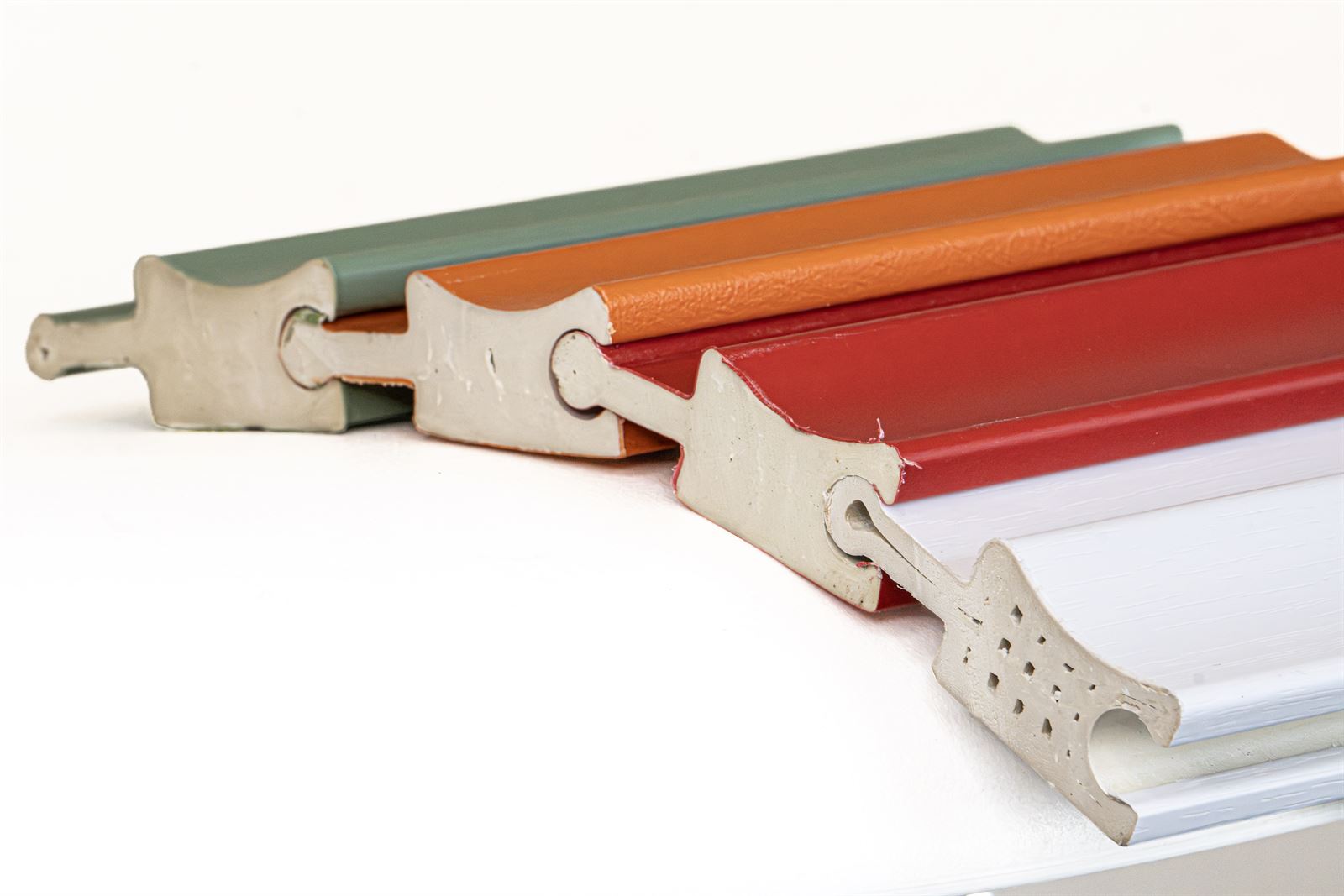
Each piece is joined to the next by a hinge. Once installed, the whole strip can stay straight or bend little by little, piece by piece, until it wraps around the shape you need.
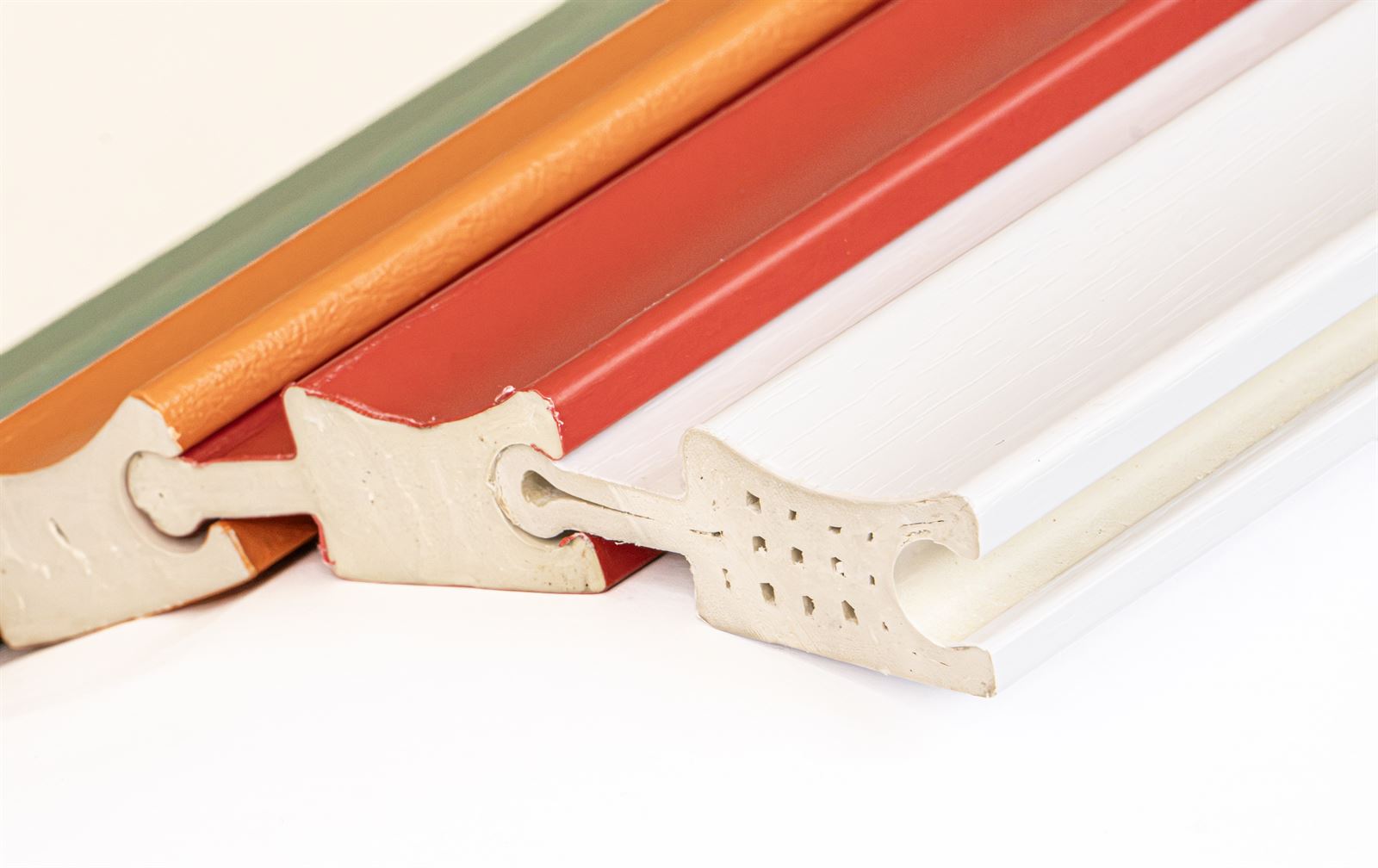
The result is a continuous cladding: you see the slats, but no cuts or forced joints.
Where to use it
- Round columns, or square ones with soft corners. A concrete column becomes a decorative feature.
- Counters and bars. Curved fronts for receptions, cafés and shops.
- Curved walls. Hallways, staircases and rooms with rounded walls.
- Furniture. Kitchen islands, headboards and custom furniture with rounded edges.
- Corners. A smooth transition between two walls instead of a right angle.
Straight, flexes, curves
On our home page we show the movement in three steps:
- Straight: it arrives as a flat panel.
- It flexes: each piece pivots on its joint with the next.
- Curved: it wraps around columns, counters and rounded corners.
See it in motion in the Panels that bend section.
Colours
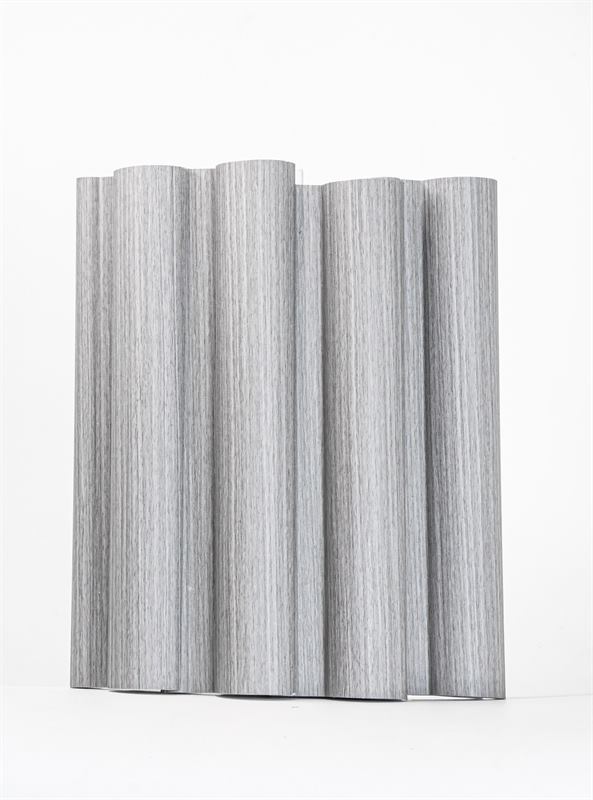
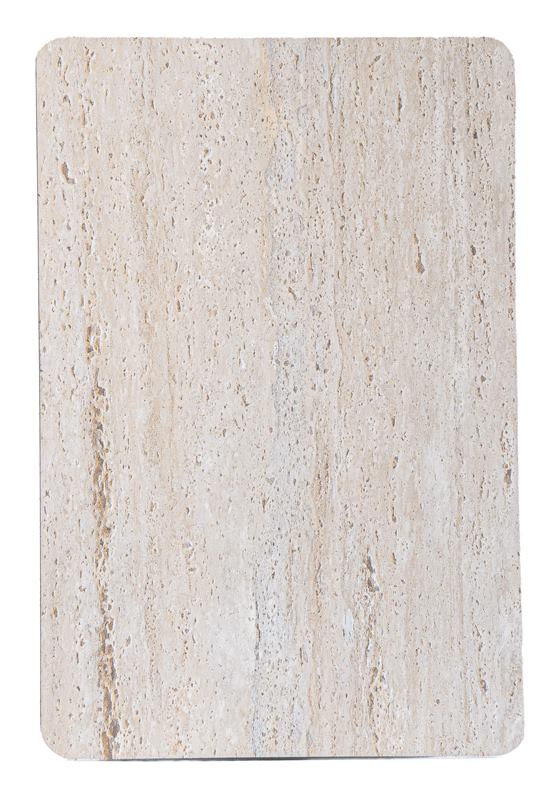
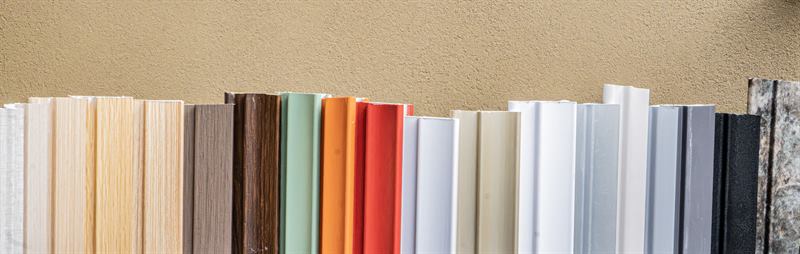
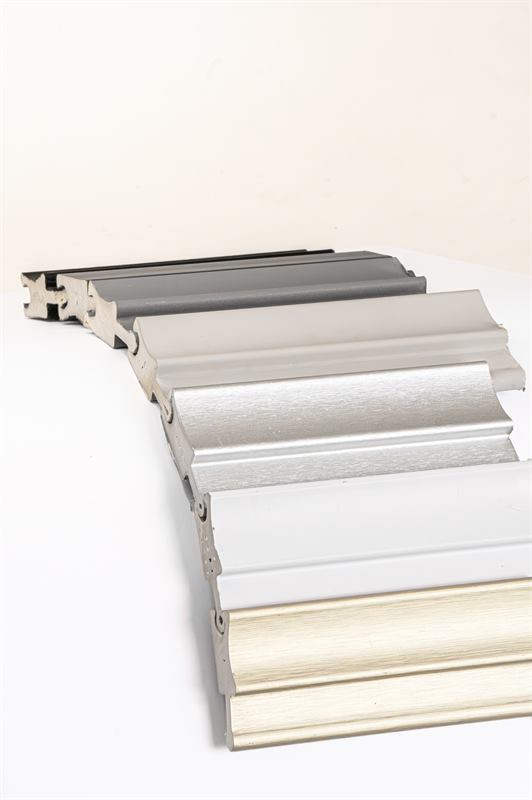
The articulated pieces come in solid colours and wood finishes. Our samples include green, orange, red, white, greys and woods.
Tips before you ask for a quote
- Measure the column's perimeter (all the way around) and its height.
- On counters and curved walls, measure the length along the curve, not in a straight line.
- Take a photo of the space: it helps us understand the shape and the edges.
With that information we can tell you how many pieces you need. More details in our guide to measuring your wall.